
Carpet Tiles vs Vinyl Plank: Which is Right for Your Commercial Space?
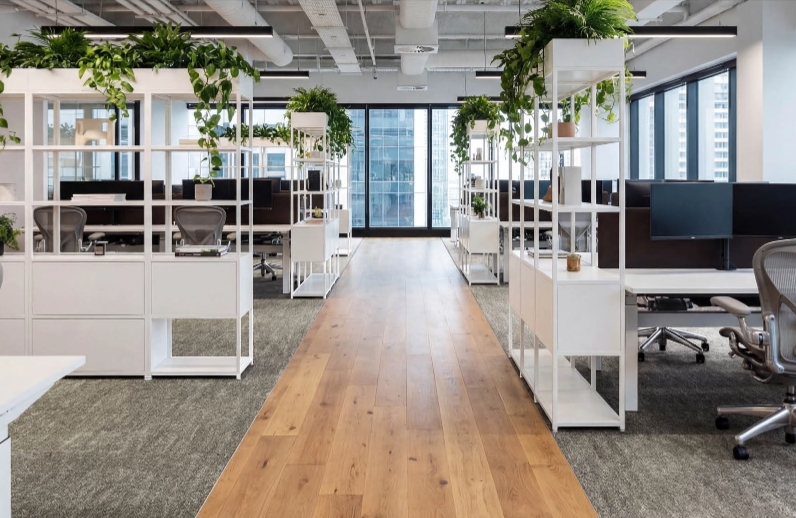
For most commercial fit-outs, the honest answer is not one or the other. Carpet tiles and luxury vinyl plank (LVP) each do specific jobs well, and the right choice comes down to how the space is used, who uses it, and what it has to withstand. This guide compares the two across the criteria that matter when you are specifying flooring for a commercial project, so you can match the product to the application rather than to a trend.
- Choose carpet tiles where acoustics, comfort, and warmth matter, such as offices, aged care living areas, libraries, and classrooms.
- Choose vinyl plank where moisture, spills, and heavy cleaning are routine, such as healthcare, kitchens, entries, amenities, and high traffic corridors.
- In most buildings you will use both, zoned by function. The skill is matching performance to each area and managing the transitions between them.
What each product actually is
Carpet tiles
Modular carpet squares, commonly 500 x 500 mm or plank formats such as 250 x 1000 mm, usually with a bitumen or cushion backing. They are laid tile by tile, which means a damaged or stained tile can be lifted and replaced on its own without redoing the whole floor.
Luxury vinyl plank (LVP / LVT)
Multi layer vinyl planks or tiles with a printed design layer and a clear wear layer on top. Available as glue down, loose lay, or click lock. Vinyl is hard, water resistant, and also modular, so individual planks can be replaced.
How they compare
Durability and traffic
Vinyl handles rolling loads, grit, and constant foot traffic well thanks to its hard wear layer, which makes it forgiving under trolleys, wheelchairs, and dragged furniture. Carpet tiles are durable too, but performance depends on fibre type, pile, and density, so the specification matters more than the category. Both are modular, so worn zones can be replaced without a full strip out, which lowers cost over the life of the floor.
Acoustics
This is where carpet earns its place. Carpet tiles absorb sound and reduce impact noise, which matters in open plan offices, aged care, libraries, and classrooms. Hard floors reflect sound. If you specify vinyl in an acoustically sensitive space, you usually need an acoustic backing or underlay to meet impact sound requirements.
Comfort and safety underfoot
Carpet is warmer and softer, which suits spaces where people stand for long periods or where falls are a concern, such as aged care. Vinyl is harder underfoot. For both products, check slip resistance against AS 4586 for the specific area, since wet entries, kitchens, and amenities carry higher requirements than dry interior zones.
Moisture and cleaning
Vinyl is the clear choice anywhere water, spills, or frequent mopping are involved, including healthcare, food service, entries, and amenities. It resists moisture and mould and is simple to sanitise. Carpet can be cleaned and many commercial ranges resist staining, but it is not suited to wet areas.
Maintenance and replacement
Both are modular, which is a genuine shared advantage. Damaged sections can be swapped out tile by tile or plank by plank, so you avoid a full replacement over isolated wear. Keep attic stock from the same dye lot so future replacements match. Vinyl generally needs less day to day attention, while carpet needs regular vacuuming and periodic deep cleaning.
Design and aesthetics
Carpet tiles give you colour, texture, and pattern, and can be laid in different directions to create zones or aid wayfinding. Vinyl offers realistic timber and stone looks with consistent supply across batches. Both let you mix formats and create deliberate transitions between areas.
Cost
Supply cost varies by range and specification more than by category. Entry level vinyl and entry level carpet tile sit in a similar band, with higher performance options in both costing more. The more useful question is lifecycle cost, where modularity in both products reduces the cost of replacing worn areas over time.
Sustainability and indoor air quality
Many commercial carpet tiles and vinyl ranges carry low VOC certification and recycled content. If the project targets Green Star or has indoor air quality requirements, request the relevant certifications and Environmental Product Declarations for the specific range rather than relying on category assumptions.
Matching the product to the sector
Offices and workspaces
Carpet tiles in open plan and meeting areas for acoustics and comfort, with vinyl in kitchens, breakout zones, and high traffic walkways. Zoning the two is standard practice.
Aged care
Carpet in living and bedroom areas for warmth, acoustics, and fall comfort, with slip rated vinyl in ensuites, kitchens, and clinical areas. The right balance protects both amenity and hygiene.
Education
Carpet tiles in classrooms and libraries for noise control, with vinyl in corridors, science rooms, and wet areas.
Healthcare
Vinyl dominates for hygiene and ease of cleaning, with carpet limited to lower acuity, non clinical zones such as administration offices and waiting areas.
Retail and hospitality
Driven by aesthetics and traffic. Vinyl suits entries and back of house, while carpet works where acoustics and feel matter to the experience.
The real answer: zone the space
Most well specified commercial buildings use both products, mapped to function. Carpet where sound and comfort matter, vinyl where moisture and wear dominate, and considered transitions in between. Treating it as a single choice for the whole building usually compromises one area to suit another.
Before you specify: a quick checklist
- Fire performance: check critical radiant flux to AS ISO 9239.1 for the building class and egress paths.
- Slip resistance: confirm the required rating to AS 4586 for each wet or transitional area.
- Acoustics: confirm impact sound requirements and whether an acoustic backing is needed.
- Warranty: match the commercial wear warranty to the expected traffic level.
- Lead time and continuity: confirm stock and dye lot availability, and order attic stock up front.
- Certifications: request VOC, recycled content, and EPDs where the project requires them.
Frequently asked questions
Is vinyl plank better than carpet tiles for commercial use? Neither is better overall. Vinyl suits moisture and heavy cleaning, while carpet suits acoustics and comfort. Most commercial projects use both, zoned by function.
Are carpet tiles or vinyl planks cheaper? Supply cost depends more on the specific range than the category. Both have entry level and higher performance options across a similar price spread.
Can you use carpet tiles and vinyl plank in the same space? Yes, and most commercial fit-outs do. The two are zoned by function with deliberate transitions between areas.
Which lasts longer in high traffic? Vinyl handles rolling loads and grit well, and high density commercial carpet tiles also perform strongly. Both can be replaced modularly, which extends the practical life of the floor.
Specifying flooring for a project?
Inspired Floorcoverings supplies commercial carpet tiles and luxury vinyl plank across Australia. We can provide samples, specification support, and product documentation to help you match the right product to each zone of your project.